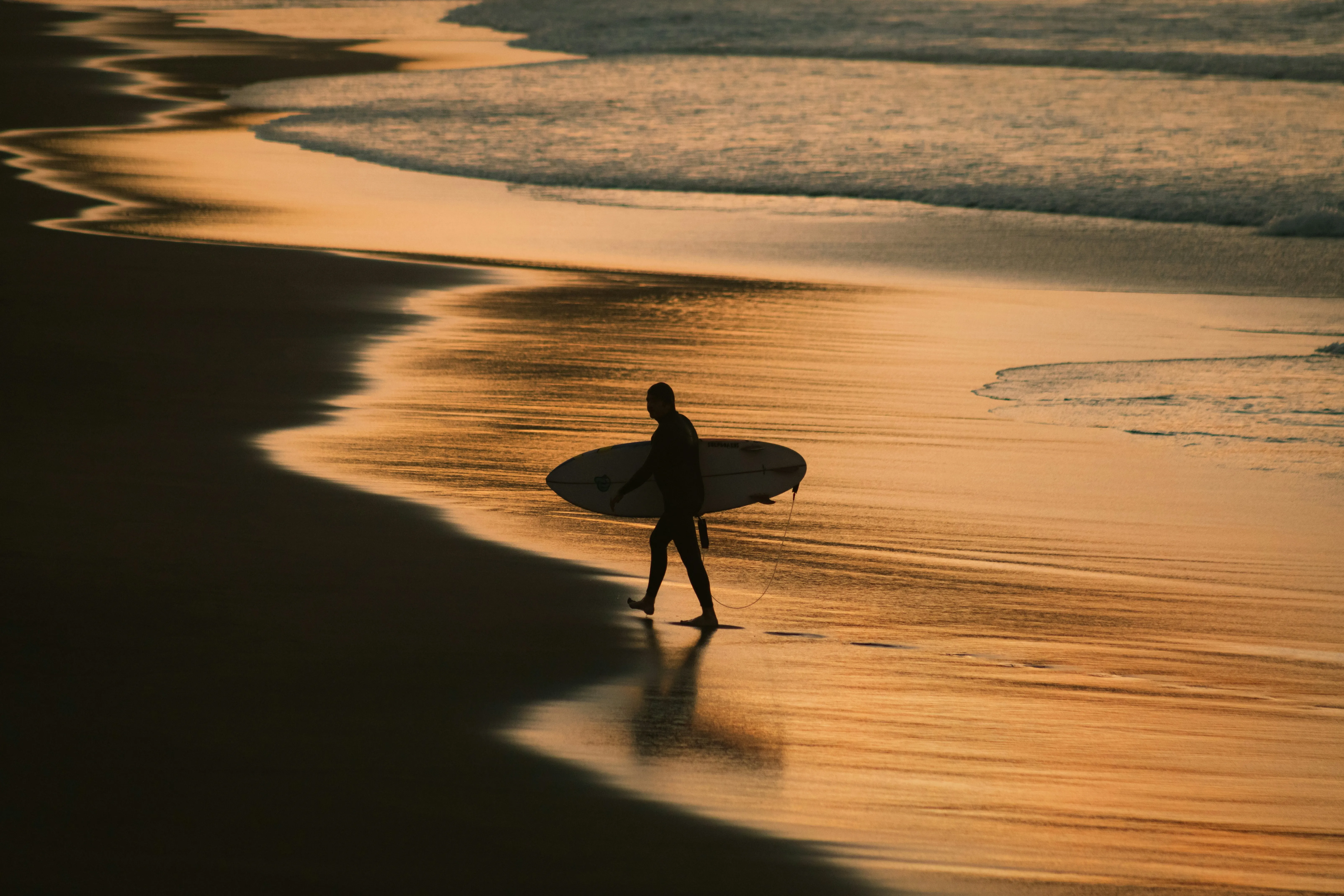
The first thing I do every morning is open the door and listen. Before I look at a forecast, before I check the tide chart, before I read a single number. If the howler monkeys sound far away and the air feels still on my face, it is probably going to be a good morning at Guiones. That is how locals read this beach. Not by data. By feel, then data. This post is for the surfer who wants to learn how to do the same.
One break, two seasons, twelve moods
Playa Guiones is a sand-bottom break about three kilometers long. There is no reef and there is no point. The sandbars shift with the swell, the tide moves the takeoff zones, and the wind decides whether the faces stand up clean or get blown apart. What makes Guiones rare is that it works almost every day of the year. Dry season, rainy season, full moon, new moon. Something is always rideable. The skill is choosing where on the beach to paddle out, and when.
Dry season: December through April
The dry season is what brings most surfers to Nosara for the first time. The trade winds come from the northeast, which means they blow offshore at Guiones in the morning. That is the postcard version of this beach. Light wind, clean water, glassy faces at sunrise. The swell tends to be smaller, head high or under for most of the season, which is part of why Guiones became famous as a beginner-friendly break. Easy paddle, forgiving wipeouts, plenty of takeoff space.
The trade-off is the crowd. December through April is when the northern hemisphere wants to be somewhere warm. By 9am the lineup gets crowded, especially mid-beach. By 11am the trades pick up and the surface starts to chop. We tell guests to be in the water by 6:15. If you are not in the water by 7:30, you are surfing a different ocean than the people who were.
Green season: May through November
The green season is the one most travel guides warn people about. We think it is the better surf window if you are intermediate or above. The southern hemisphere is in its winter, which means storms in the South Pacific send long-period swell straight at this stretch of coast. The faces get bigger, the period gets longer, and the lineup thins out because most tourists left.
September and October are the rainiest months of the year. They are also our favorites. The mornings are still mostly clear. The rain tends to come in the late afternoon, often in a short hard sheet that ends as fast as it started. The swell is at its peak and the water warms up. Villas are at their lowest rates of the year. If you can handle one wet afternoon out of three, this is when Nosara feels most like Nosara.
How to read the day
Once you understand the season you are in, the rest is reading the day. Four things matter. Wind, tide, swell direction, and where you stand on the beach.
Wind first
A morning with no wind is the best morning at Guiones. Light offshore is better than light onshore. If you feel a breeze on the back of your neck walking down the beach access path, that is offshore and you should hurry. If you feel it on your face walking the same path, the day is already turning. By the time the wind switches at the beach, the lineup has usually known for forty minutes.
Then the tide
Guiones is a roughly mid-tide beach. Low tide can get fast and shut down on inside sections. High tide can get fat and lose its shoulder. Two hours either side of mid is the safe answer. The exact tide depth that works changes with the swell size and the sandbar shape, so the rule is general, not a law. Locals figure out the daily window in two paddles.
Swell direction last
South and southwest swells push into the southern half of the beach first. West swells light up the middle and north end. If the forecast is calling for a strong south, walk fifteen minutes south of the main access. You will find better banks and fewer people. If it is calling west, the main access works. North-end Guiones is best on bigger swells when the inside sections become workable.
The mistakes we see
The most common one is paddling out at the busiest stretch of beach out of habit, because that is where the rental shops set up. Twenty minutes either direction usually gives you a less crowded peak. Beginners benefit from staying inside, where the white water is forgiving and the impact zone is shallow. Intermediates benefit from paddling further out than they think, past the visible lineup, where the cleaner sets land.
The other mistake is treating Guiones like it is small. It is small most days. But a few times a year, when a long-period southwest swell lines up with a clean offshore morning, this beach gives you the best wave you will surf in Central America. We watch for those windows and message clients the night before.
If you want to surf with us
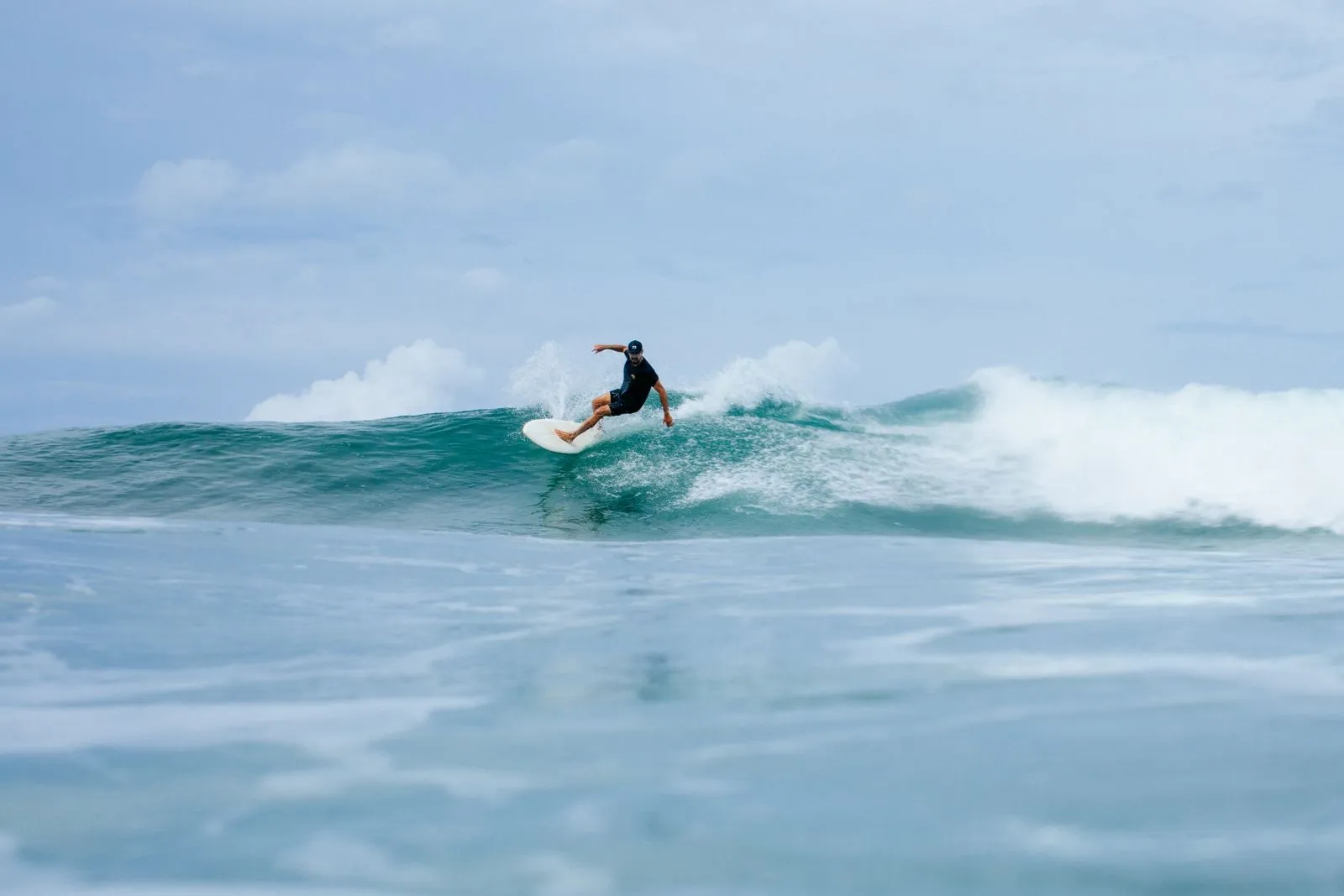
Avela works with certified bilingual instructors who live on this stretch of coast. We match people to coaches based on level, board preference, and family setup, not by who has the next opening. We also build full surf-and-villa weeks around the swell window we think is going to land. If you are planning a trip, we are happy to look at the forecast with you before you book your dates.